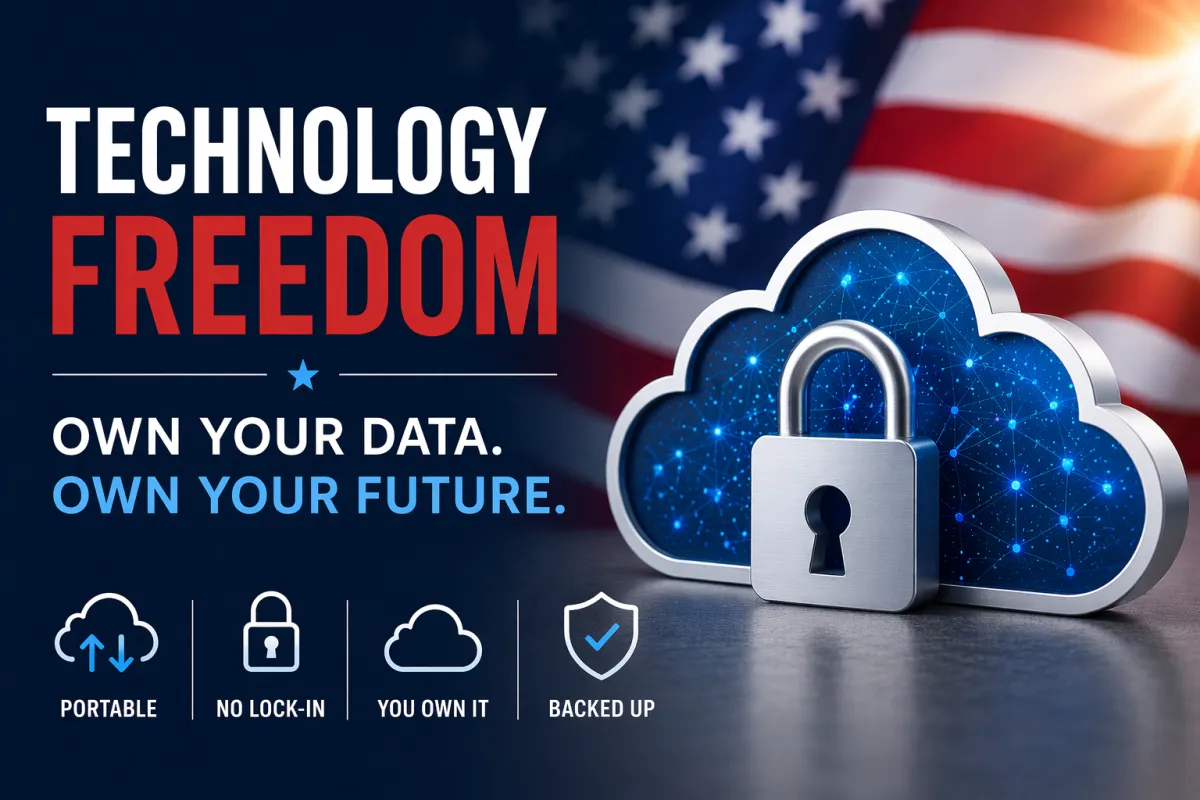
Technology Freedom: Owning Your Business Data
A July 4th Perspective on Business Independence
Every year on Independence Day, we celebrate freedom, independence, and the ability to control our own future.
For businesses, that same idea applies to something just as important: your data.
In today’s digital world, data is one of the most valuable assets a company owns. Customer records, financial documents, communications, operational systems, and internal knowledge all live inside digital platforms.
But many businesses don’t realize something surprising:
They may not fully control the data their company relies on every day.
True technology freedom means making sure your business—not a vendor, platform, or software provider—remains in control of your information.
Here are a few key areas every organization should think about when it comes to data independence.
Data Portability: Can You Take Your Data With You?
Many businesses rely on cloud platforms and software services to manage daily operations. While these tools can be incredibly powerful, they can also create hidden risks if companies don't understand how their data is stored and accessed.
A simple but important question to ask is:
If you changed providers tomorrow, could you easily retrieve your data?
Data portability means your information can be exported, transferred, and used elsewhere without complicated barriers. Without it, businesses can find themselves stuck in systems that are difficult—or expensive—to leave.
Smart organizations make sure their systems allow them to move their data when needed.
Vendor Lock-In: When Technology Becomes a Trap
Vendor lock-in happens when switching technology platforms becomes difficult because systems are too interconnected, proprietary, or restrictive.
This can lead to situations where businesses:
• Feel forced to stay with a provider even when service declines
• Pay increasing subscription costs
• Struggle to adopt better tools or new technology
• Lose flexibility in how they operate
Technology should support your business decisions—not limit them.
Choosing platforms that support integration, standard formats, and flexible data access helps protect your long-term independence.
Cloud Ownership: Who Really Controls Your Information?
Cloud platforms have transformed how businesses operate. They allow teams to collaborate from anywhere and provide powerful tools that were once only available to large enterprises.
But the convenience of the cloud can sometimes create confusion about ownership.
Just because your data is stored in the cloud doesn’t mean the platform controls it. Your business should always maintain clear ownership of:
• company documents
• communications
• customer records
• operational data
Understanding how your cloud systems store, secure, and allow access to data is essential to maintaining control.
Backups: The Safety Net Every Business Needs
One of the most overlooked aspects of data independence is having backups you control.
Businesses often assume their cloud providers automatically protect them from data loss. In reality, many services focus on availability—not long-term recovery.
Independent backups ensure your company can recover from:
• ransomware attacks
• accidental deletions
• system failures
• service outages
When businesses maintain secure, independent backups, they preserve control over their most critical information—even during unexpected events.
Technology Independence Matters
The right technology should empower your business, not create dependency.
Owning your data, maintaining flexible systems, and protecting your information with strong backup strategies allows companies to stay in control of their future.
As businesses grow and adopt new tools, keeping this principle in mind can make all the difference:
Your technology should serve your business—not the other way around.
At Coulson Technologies, we help organizations design systems that are secure, flexible, and built for the long term—so businesses always stay in control of what matters most.
