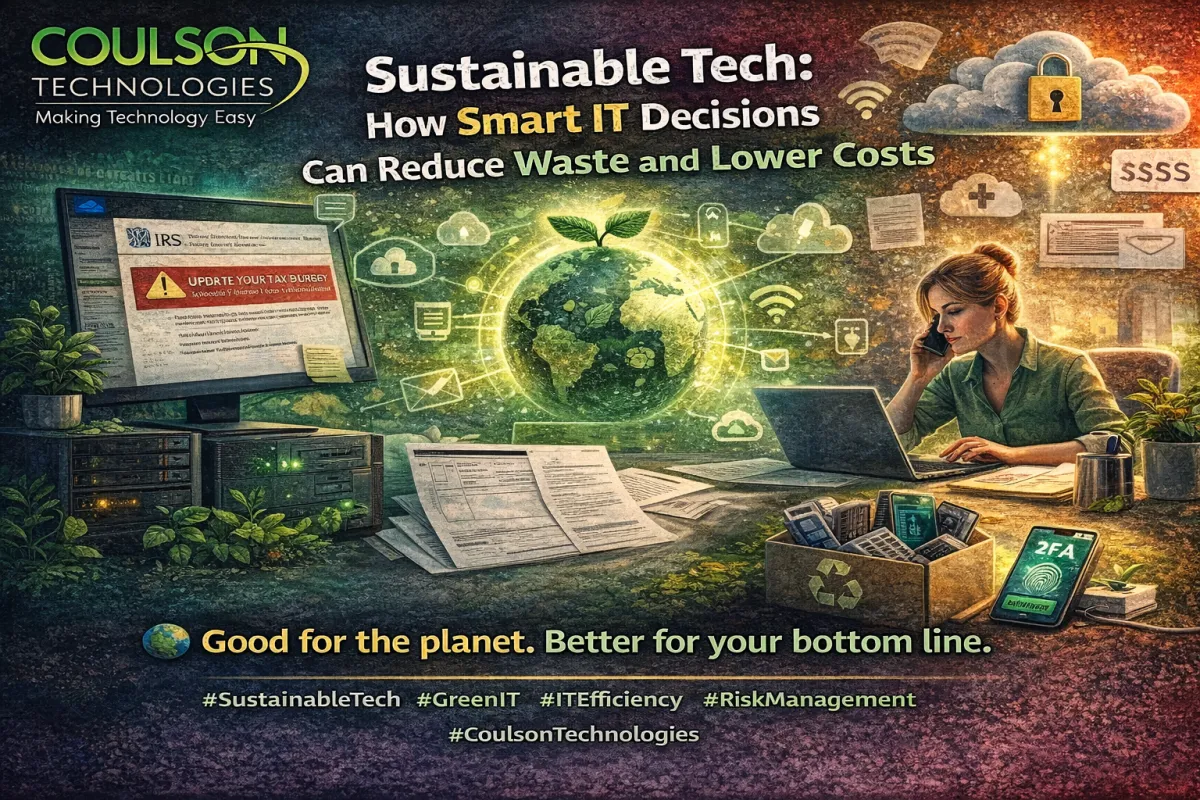
Sustainable Tech: How Smart IT Decisions Can Reduce Waste and Lower Costs
Sustainability isn’t just an environmental initiative anymore.
It’s a business strategy.
Companies are discovering that smart IT decisions don’t just reduce environmental impact — they reduce operational costs, improve efficiency, and modernize infrastructure at the same time.
The conversation is no longer:
“Should we go green?”
It’s:
“How can we run smarter?”
Here’s how sustainable technology decisions can help your business reduce waste and lower expenses.
1. Server Consolidation: Doing More With Less
Many businesses still operate multiple underutilized servers.
Consolidating servers through:
Virtualization
Cloud migration
Infrastructure optimization
Can:
Reduce power consumption
Lower cooling requirements
Decrease hardware maintenance costs
Improve performance
Fewer machines.
Lower energy bills.
Stronger systems.
2. Cloud vs. On-Prem: Understanding Energy Impact
Modern cloud providers operate highly optimized data centers designed for efficiency at scale.
Compared to many small on-prem server rooms, cloud infrastructure often:
Uses less energy per workload
Leverages renewable energy sources
Reduces cooling inefficiencies
Improves uptime
The right cloud strategy can reduce both environmental impact and hardware overhead.
3. E-Waste Recycling Best Practices
Outdated devices shouldn’t end up in storage closets — or landfills.
Responsible IT recycling includes:
Secure data wiping
Certified recycling vendors
Refurbishment programs
Asset lifecycle tracking
Proper e-waste management protects:
Your data
Your brand reputation
The environment
And it often reduces disposal and storage costs.
4. Power Management Settings: Small Tweaks, Big Savings
Many companies overlook built-in energy-saving features.
Simple adjustments can:
Automatically power down unused devices
Reduce monitor energy consumption
Schedule after-hours shutdowns
Lower idle energy use
These small configuration changes can generate meaningful annual savings.
5. Reducing Unnecessary Hardware
Do you really need:
Multiple standalone printers?
Extra servers “just in case”?
Duplicate network hardware?
Unused desktops collecting dust?
Streamlined infrastructure reduces:
Energy usage
Maintenance costs
Upgrade expenses
Clutter and inefficiency
Minimalism in IT isn’t about cutting corners.
It’s about intentional design.
6. Remote Work & Energy Savings
Hybrid and remote work models can significantly reduce:
Office power usage
Heating and cooling expenses
Equipment duplication
Commuting-related emissions
With secure remote access tools, businesses can:
Maintain productivity
Improve employee satisfaction
Reduce operational costs
Efficiency and sustainability often move together.
7. Digital Documentation vs. Paper
Going paper-light (or paperless) reduces:
Printing expenses
Storage costs
Physical filing systems
Shredding and disposal fees
Secure digital document management:
Improves searchability
Strengthens access control
Reduces waste
Enhances workflow efficiency
It’s cleaner — and faster.
Sustainability Is Strategic
Sustainable IT isn’t about adding complexity.
It’s about optimizing systems intentionally.
When done correctly, sustainable technology decisions:
Lower energy costs
Reduce hardware expenses
Improve operational efficiency
Strengthen security
Modernize infrastructure
👉 Good for the planet. Better for your bottom line.
If your business hasn’t evaluated its technology footprint recently, now is the time.
Coulson Technologies helps organizations build smarter, more efficient, and more sustainable systems — without sacrificing performance.
Because responsible technology isn’t just ethical.
It’s strategic.
